What’s the difference between a reprint and a fake or counterfeit sports card?
- Sports Card Explained
TLDR: Reprints are legitimate, licensed reproductions made by official sports card manufacturers (like Topps or Panini). Counterfeits are unauthorized fakes, often misleadingly labeled as "reprints" (especially on eBay) to scam unknowing collectors.
This is something I see in the hobby often—specifically on eBay. As the market continues to grow, we continue to get an influx of new collectors (re)entering the hobby. Often, these new collectors are excited and eager to buy cards. They are also very uneducated.
And this lack of knowledge makes them easy targets. Many sellers are passing off counterfeits (fake) cards as reprints. This is problematic for three reasons:
They are misrepresenting what they are selling (always wrong).
They are preying on the uniformed collectors.
They are also shifting the language of the hobby—normalizing how new collectors understand and view reprints.
In this article, we will delve into the key differences between reprints and counterfeits, and provide insights on how new collectors can differentiate and identify these cards before they buy them.
Reprints
Reprints are licensed, and legitimate, reproductions of a card by the card's manufacturer (Panini, Topps, Upper Deck etc.) These reprints are often produced to commemorate significant events, anniversaries, or player achievements.
The key distinction is that reprints are officially sanctioned cards, ensuring their legitimacy in the collector's market. Collectors can often find these cards with clear indications of their reprint status, such as a different border color, good condition, or a special foil stamp.
In short, reprints are authentic cards made by a licensed sports card company.
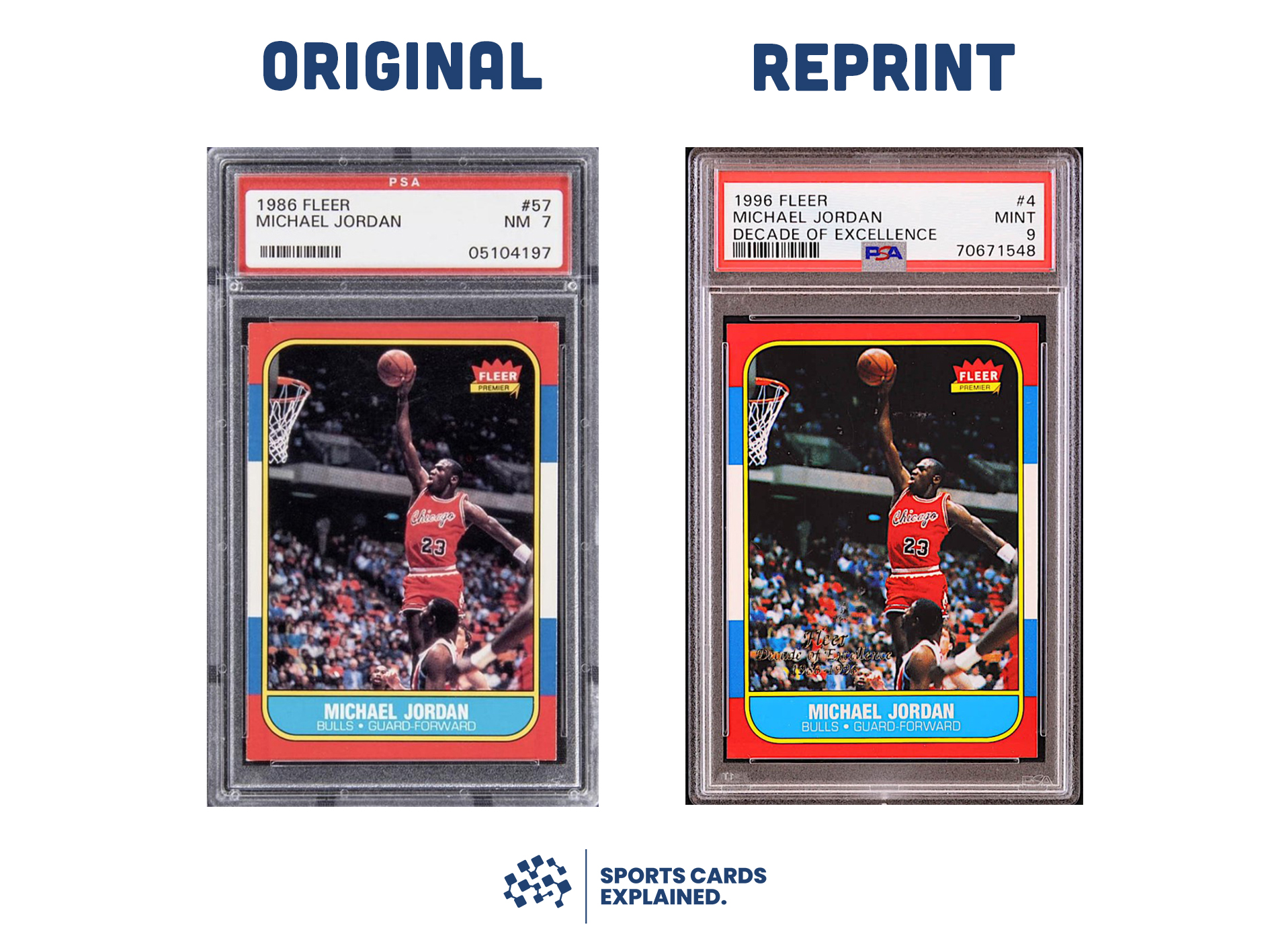
A perfect example of this is the 1986 Fleer Michael Jordan and 1996 Fleer Michael Jordan (Decade of Excellence). The original was printed in 1986 and the reprint was produced in 1996, stamped with "Fleer Decade of Excellence 1986-1996" in gold foil to distinguish the card from the original. While the 1986 version is worth way more than the reprint, they are both legitimate cards produced by Fleer.
Counterfeits
On the other hand, counterfeit cards are unauthorized replications often created to trick collectors into believing they are acquiring a genuine card. In other words, they were printed in some dude’s basement. They are fake, they are knockoffs, they fugazis! You get the idea.
Counterfeiters may employ various tactics to mimic the appearance of the original, like using printing techniques and replicating holographic elements. These fake cards flood eBay and other online marketplaces, posing a significant risk to unsuspecting collectors who may inadvertently purchase them thinking they are the real deal.
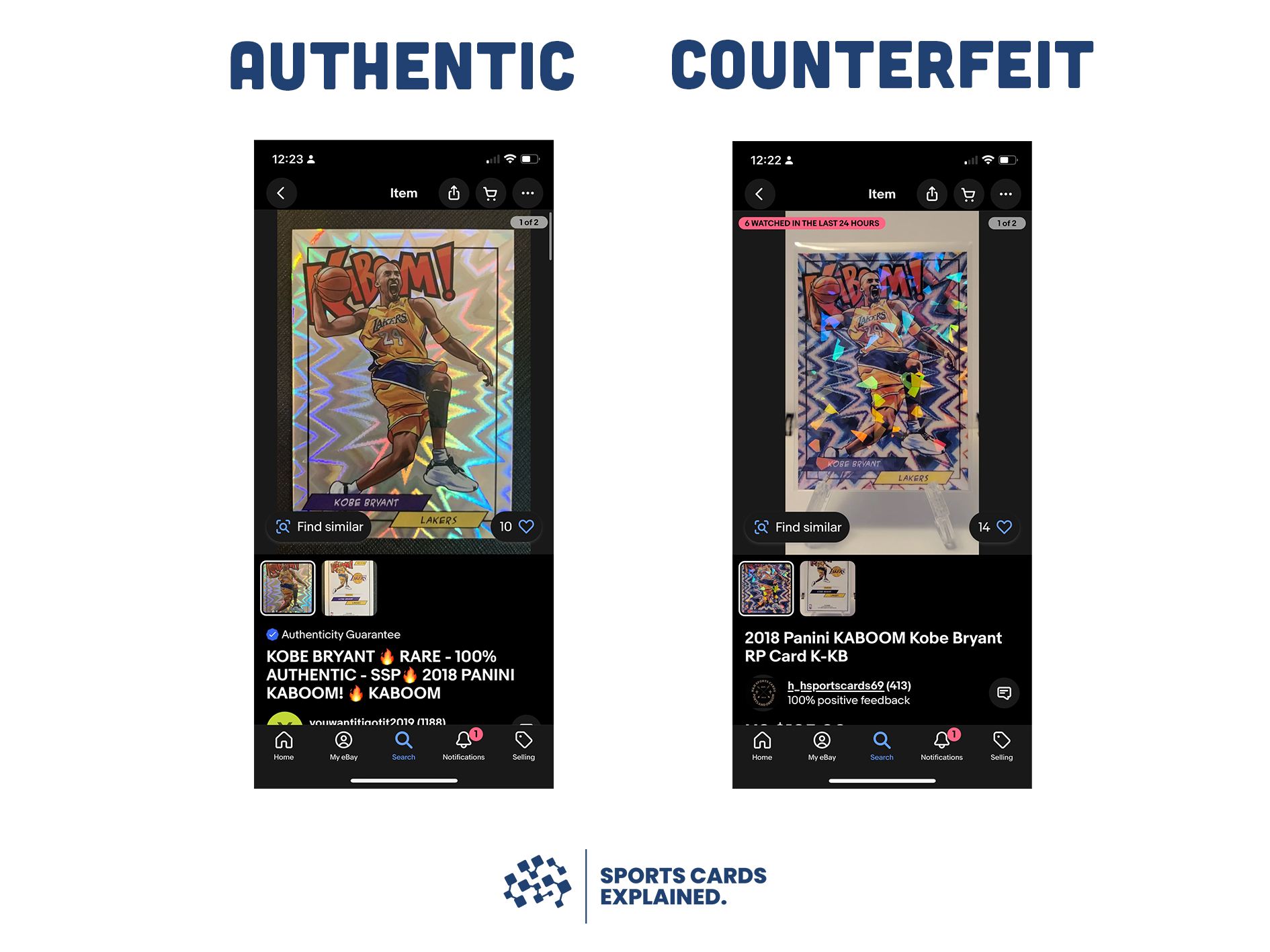
To get around the fact that they are selling fakes cards. Sleazy sellers will often call these reprints instead. Of course, they wouldn’t get any sales if they called them FAKE. In their eBay listing they will sneak in “RP” in the headline or “reprint” somewhere deep in the item description. They will even use terms like “promo” or “promotional card.”
This mislabeling not only harms the collector's trust but also jeopardizes the integrity of the sports card market.
And these scammers don’t counterfeit just any cards, they counterfeit high demand SSP case hits that are worth big bucks. For example, Kabooms and Downtowns are two heavily counterfeited cards on the market. Watch out!
How to Protect Yourself from Fake Sports Cards
1. Educate Yourself
As they say, the more you know. If you’re a new collector, you must do you research. Stay informed about the latest releases, market prices, and study the look and feel of certain cards. Familiarity with these details can help you spot potential counterfeits.
2. Scrutinize Card Details
Carefully examine the details of the card, such as holographic elements, fonts, and colors, comparing them to known authenticated examples. Most fakes will be sloppy, lacking the clarity and detail of the real deal. If the photos are blurry or poor quality, that’s usually a sign the seller is trying to hide something,
3. Verify Card Sources
Only purchase big cards from reputable sellers, such highly rated eBay accounts, established hobby shops or other well-known online platforms (i.e., Goldin Auctions). eBay also has a Authenticity Guarantee, so if your seller is offering this guarantee, it’s a good sign.
4. Trust Your Instincts
If something feels off about a deal or a card, trust your instincts. Taking the time to research and confirm the authenticity of a card can save you from potential disappointment and financial loss. If the deal seems too good to be true, it probably.
5. Pay Attention
We’ve all been there. Searching eBay hours and you stumble upon a banger. You get so excited that forget to check for any of the above. Just slow down and do your due diligence before pulling the trigger on any cards that may be counterfeit.
The Ultimate Cheat Code For New Collectors
How to Identify, Buy & Collect Modern Sports Cards
We break down the complicated world of modern sports cards and provide clarity, assurance, and answers to all your burning questions. It's the first guide of its kind and is guaranteed to 10X your sports card knowledge, overnight.
/
A digital playbook for new collectors
The Ultimate Cheat Code for Mastering Modern Sports Cards.
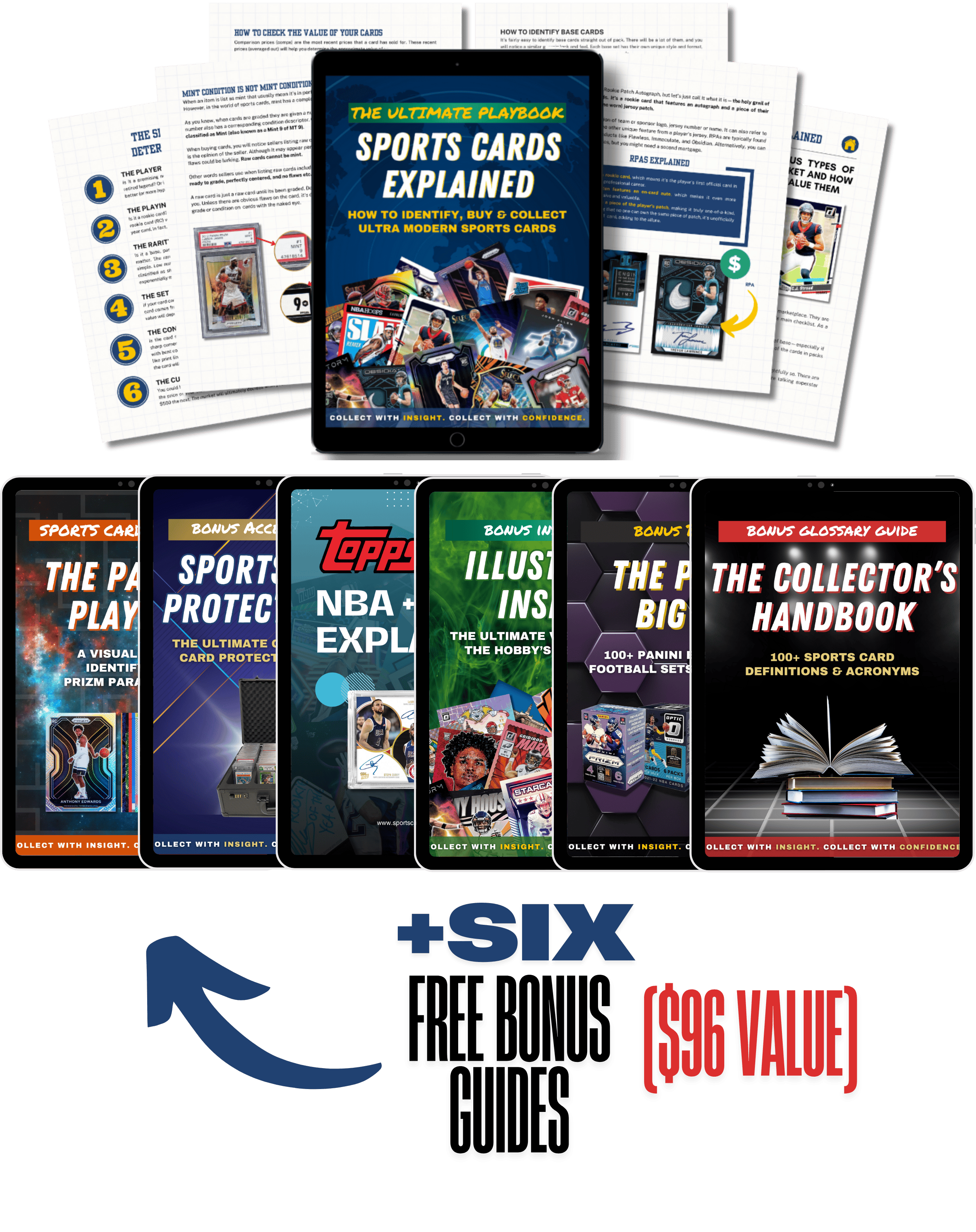
Receive these six exclusive bonus guides when you get THE PLAYBOOK—absolutely free.
8 easy-to-follow modules
6 bonus guides ($96 VALUE)
50+ images & graphics
80+ action-packed pages
100+ sports card definitions
Beautifully designed layout
Easy internal navigation
Plus more...